Disclosure: kittynex.com participates in affiliate programs. If you buy through a link on this page, we may earn a commission at no extra cost to you.
By Jason Feng, Founder & Researcher. See how this review was researched.
Quick answer
An automatic cat feeder with a collar tag opens its lid only when the right tag is near the bowl. The Petlibro One RFID Smart Feeder lists at $149.99, ships with one tag, and reads that tag through the mat that sits under the machine. It does not read microchips, and it will not read a second tag. Sure Petcare takes the other route: the SureFeed Microchip Pet Feeder reads implanted microchips worldwide and SureFlap RFID tags, holds 400 ml, and seals the bowl for wet or dry food.
The first question is not which machine. It is whether your cat will keep a collar on.
Table of contents
- Why collar-tag feeders exist
- Three ways a feeder knows which cat is there
- How the tag handshake works
- Where collar-tag feeding breaks down
- The microchip alternative
- Camera access: the third option
- Specifications side by side
- Wet food changes the geometry
- How to choose
- Our verdict
- How we researched this
- Sources
Why collar-tag feeders exist
Most automatic feeders solve one problem: putting food down on a schedule when nobody is home. They do not care who eats it. In a single-cat house that is fine, and the whole question of identification never comes up.
Add a second cat and the problem changes shape. Food becomes a contested resource, and the faster or more food-motivated cat wins nearly every time. Owners describe it in the same way regardless of brand: one cat gains weight, the other loses it, and nobody can tell from a shared bowl who ate what.
Identification feeders exist for three specific situations. The first is a prescription diet, where one cat needs a renal or urinary formula and the other must not touch it. The second is weight management, where you need to control intake for one animal without restricting the other. The third is the senior cat who eats slowly, because a slow eater in a multi-cat home is usually a thin eater.
None of those are solved by a bigger bowl or a second bowl. They need a gate that opens for one animal and stays shut for the rest.
Three ways a feeder knows which cat is there
Three technologies do this work, and they fail in different ways. Sort them by what the cat has to carry.
Table 1. Identification methods, by what they require of the cat.
| Method | What the cat carries | Opens for | Fails when | Example |
|---|---|---|---|---|
| RFID collar tag | A tag on a collar | A tag paired to that feeder | The collar comes off, or the tag is not on the cat | Petlibro One RFID Smart Feeder |
| Microchip | Nothing visible; an implanted chip | Any registered chip or tag | The chip is unreadable, or the cat is not registered | SureFeed Microchip Pet Feeder |
| Camera recognition | Nothing | A designated pet, matched by image | Lighting, angle or a lookalike cat confuses the match | Petlibro Granary 2 X |
The distinction that matters most is passive versus active. A microchip carries no battery. An RFID collar tag also carries no battery. Both are read by the feeder, which means neither needs charging or replacement, and neither can go flat. The trade-off is placement: a microchip read fails only if the chip itself fails, while a collar read fails the moment the collar comes off.
Camera identification removes both hardware problems. It replaces them with an accuracy question that no manufacturer answers with a published error rate.
How the tag handshake works
The collar-tag design is simple once you see where the reader lives.
On the Petlibro One RFID Smart Feeder, the RFID reader is built into the mat that sits under the unit. The product FAQ is direct about this: the pet recognition feature depends on the mat, and if the mat is not properly attached to the base, recognition fails. The company recommends checking the mat’s attachment daily.
That detail explains a failure mode owners report. A reader in the mat means the tag has to be inside a small detection zone at floor level, not somewhere else in the room. A cat that approaches from an angle, or that eats with its body turned away, is presenting its collar to a different part of the space than a cat that walks straight in.
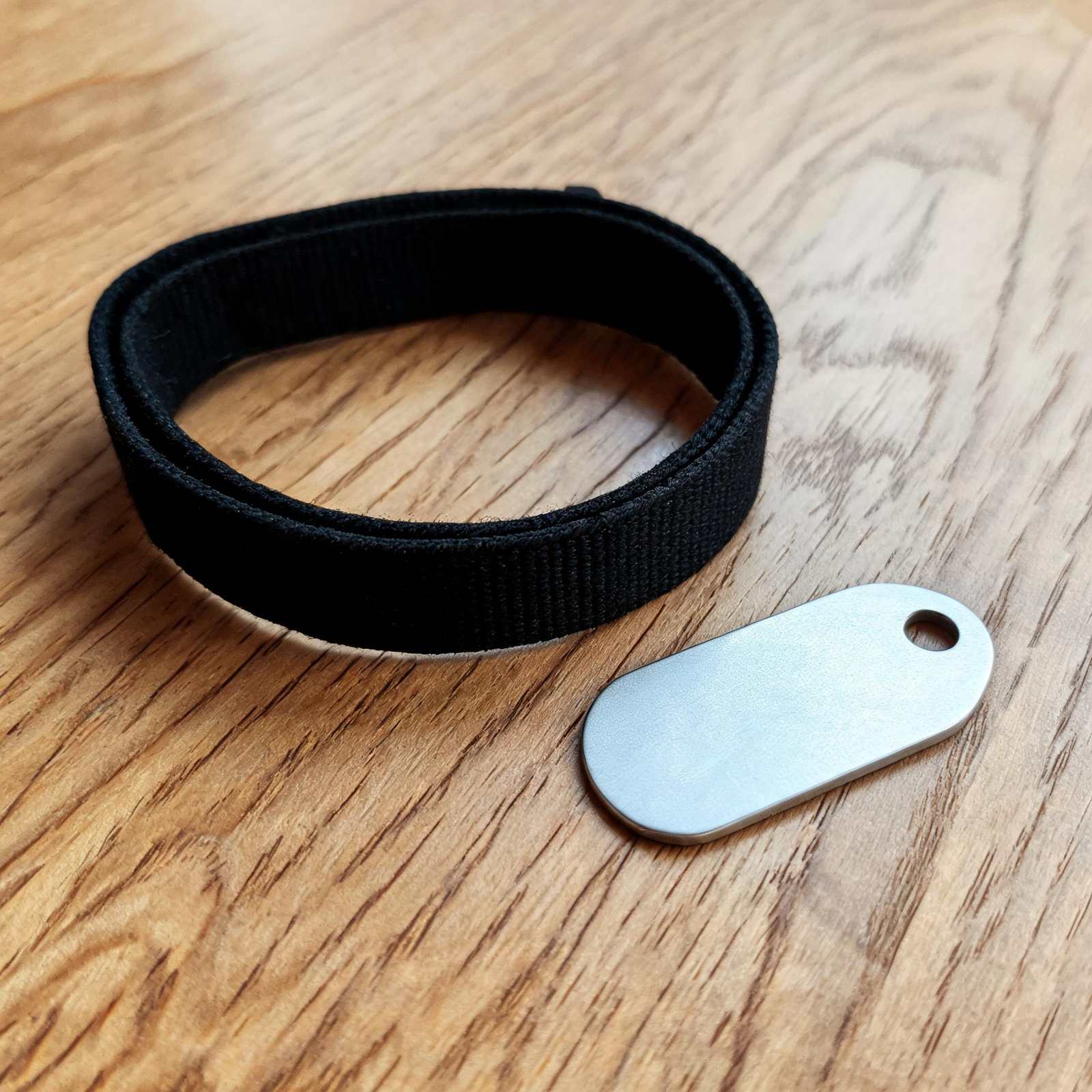
Petlibro publishes the tag’s physical numbers: 4.2 g, 23 x 23 x 14.18 mm, with a QR code printed on it and a snap-release collar in the box. The tag is splashproof, not waterproof, and it does not need charging. A spare RFID Collar Tag lists at $14.99 on the same site.
The handshake also fixes a hard limit. Petlibro’s FAQ states the reader works only with the dedicated collar tag, not microchips and not tags from other brands, and that a feeder can sync with only one tag. One tag per machine means one machine per cat, which is the opposite of how a shared hopper works.
Where collar-tag feeding breaks down
Five limits are documented by the manufacturers themselves, and each one changes how you would set the system up.
The collar. Nothing works if the cat will not wear one, and indoor cats often will not. A cat that slips a collar outdoors can lose access to its own food. Some owners run a safety breakaway collar and accept that it will come off eventually.
Tag count. Petlibro’s one-tag-per-feeder rule means a two-cat household needs two feeders, not one. If you are comparing that against a camera feeder that gates a single bowl for multiple cats, the hardware math is different.
Spacing. Petlibro instructs that multiple One RFID feeders sit at least 10 inches apart to avoid interference, and that a Dockstream fountain stay at least 5.9 inches from a feeder. Stack two feeders tightly against the same wall and you are inside the range where readers compete.
Dry food only. The One RFID Feeder accepts dry food with kibble between 2 and 15 mm. Larger pieces can jam at the outlet. Wet food is not supported at all, which rules it out for a prescription pate.
Power behavior. The unit is corded, with three D-cell alkaline batteries as backup rather than a primary supply. Petlibro warns against running it on batteries alone, and notes that on battery power the Wi-Fi and reset functions are disabled while meal schedules continue. Rechargeable batteries are explicitly not recommended.
The microchip alternative
If a collar is the sticking point, the microchip route removes it.
Sure Petcare’s SureFeed Microchip Pet Feeder reads the identification microchip a vet has already implanted, and the company states it is compatible with all common microchips worldwide, alongside SureFlap RFID collar tags. One tag comes in the box. The unit stores up to 32 pet identities in memory and keeps them when the batteries are removed.
The bowl is the feature most people miss. It is a sealed compartment with a 400 ml capacity, or two pouches of wet food, and the lid closes behind the cat to keep the food fresh and away from flies. Sure Petcare describes two solid foods or a split bowl for wet and dry at the same time. That makes it the only collar-tag or microchip feeder here that is not a dry-food appliance.
Battery life is listed at six months on four C cells, which are not included, with a low battery indicator. A training mode moves the lid gradually for cats that need to get used to it, and the lid stays closed for unregistered animals.
The Connect version adds a scale. Sure Petcare says the integrated scales weigh food and LEDs guide portioning to within 1 g, and the app shows how often and how much each pet eats. The Connect links through a Sure Petcare Hub on your router, and each Hub supports up to ten connected devices.
[DATA NOT VERIFIED: Sure Petcare’s US product pages for the Microchip Pet Feeder and the Connect version did not publish a US list price in the pages fetched for this article. Confirm current pricing before ordering.]
One honest gap: microchip reading depends on the reader’s antenna reaching the chip in the cat’s shoulder. I could not find a first-party published read range for either the SureFeed or the Petlibro reader, so treat mounting position as something to test in your own home. [DATA NOT VERIFIED: no vendor-published read distance for the SureFeed microchip reader or the Petlibro RFID mat.]
Camera access: the third option
Camera recognition is the newest answer and the only one that puts nothing on the cat.
Petlibro’s Granary 2 X lists at $279.99 and uses a 1080p camera to identify the pet at the bowl, opening the lid only for the designated animal. The company states plainly that no collar or microchip is required. The same page lists a built-in bowl scale accurate to 1 g, a Smart Refill mode and a scheduled mode, and a 5 L hopper.
The catch is the subscription layer. Petlibro notes that alerts about changes in eating habits need a Petlibro Care plan, and that recording and playback need a Video Cloud AI plan. The One RFID Feeder page shows the same structure, with Care Plus at $129.99 a year and Care Standard at $59.99 a year.
If you want to see how camera recognition compares across the wider category, including per-pet meal logs, our guide to camera feeders covers what the recordings show and what the plans cost.
Specifications side by side
All figures below come from the manufacturers’ own product pages and FAQ blocks, fetched through a US egress.
| Model | Price (US) | Identification | Capacity | Food type | Power | Distinctive detail |
|---|---|---|---|---|---|---|
| Petlibro One RFID Smart Feeder (PLAF301) | $149.99 | RFID collar tag only | 3 L (about 13 cups) | Dry, 2 to 15 mm kibble | Corded, 3x D backup | Reader sits in the mat; one tag per feeder |
| Petlibro Granary 2 X | $279.99 | AI camera | 5 L | Dry | Corded | No hardware on the cat; subscription for alerts |
| SureFeed Microchip Pet Feeder | [DATA NOT VERIFIED: no US price on the fetched pages] | Microchip or SureFlap RFID tag | 400 ml | Wet or dry, sealed bowl | 4x C, about 6 months | 32 pet identities stored in memory |
| SureFeed Microchip Pet Feeder Connect | [DATA NOT VERIFIED: no US price on the fetched pages] | Microchip or SureFlap RFID tag | 400 ml | Wet or dry, sealed bowl | 4x C, plus Hub | 1 g scale and app history |
Read the capacity column twice. Petlibro’s 3 L hopper is a hopper, so it holds weeks of kibble. SureFeed’s 400 ml is a meal, refilled by you, sealed between visits. Two different jobs in one table.
Wet food changes the geometry
The Petlibro units here are dry-food machines, and the One RFID feeder is explicitly limited to dry kibble. If your prescription diet is a pate, that rules it out before price enters the conversation.
SureFeed does not have that problem, because the bowl seals and the measurement is a portion rather than a hopper. A 400 ml bowl covers one large wet meal or two small ones, which is why the same feeder appears in our wet food feeder comparison as the group-feeding end of that category.
There is a practical consequence. Dry-food hopper feeders are bought for unattended days. Sealed-bowl feeders are bought for separation at mealtimes, and they assume a human refills them. Decide which of those two you are actually buying, because the split between brands follows it almost exactly.
How to choose
Work through these in order. The first question is usually the last one people ask.
- Will the cat keep a collar on? If yes, an RFID tag feeder is the cheapest route. If no, go to microchip or camera.
- Is the food wet? Microchip and camera only. Hopper feeders handle dry only.
- Is the cat already chipped? A microchip feeder uses hardware you may already have, with nothing to charge.
- How many cats need gating? One cat, one feeder on the tag system. Camera recognition can gate a bowl in a larger household.
- Do you want logs? Both SureFeed Connect and the Petlibro camera models log intake, and both depend on an app and, for Petlibro, a subscription.
- Is a jam the real risk? Whichever brand you pick, the failures to expect are mechanical, not electronic. Our feeder troubleshooting guide starts with kibble size and dispense geometry, which is where most no-dispense complaints end up.
If you are weighing two cats against one machine, the guide to feeders for two cats works through the double-bowl, split-schedule and gated options in order of how much they actually solve.
For the broader category, including hopper sizes and camera models, see our best automatic cat feeders round-up. And to place Petlibro against PETKIT, whose current lineup is dry and freeze-dried only, the PETKIT vs Petlibro comparison covers where the two companies split.
Our verdict
Our pick for a collar-wearing cat is the Petlibro One RFID Smart Feeder at $149.99. It is the cheapest documented way to gate a bowl by identity, the tag needs no charging, and the hardware limit is stated up front: one tag, one reader, dry food, and a mat that has to stay attached.
Our pick for a cat that will not wear a collar is the SureFeed Microchip Pet Feeder. It reads the chip the cat already has, seals 400 ml of wet or dry food, and stores 32 identities. It is also a meal feeder, not a hopper, so it expects you at the bowl.
If you want neither a collar nor a subscription tied to alerts, the Petlibro Granary 2 X at $279.99 gates by camera and needs no hardware on the cat. We would only recommend it to someone comfortable with the monthly-ish review of a subscription stack.
What we would not do is buy a single collar-tag feeder for two cats and expect it to separate them. The documentation forbids it, and the physics of one reader and one tag make it impossible.
How we researched this
- Manufacturer specifications, fetched from US product pages. Prices, capacities, tag dimensions, kibble ranges, power ratings and FAQ answers in this article were read from Petlibro’s One RFID and Granary 2 X pages and their FAQ blocks, and from Sure Petcare’s US pages for the Microchip Pet Feeder and the Connect version, through a US egress so the model listings and language match the American storefront.
- Support documentation for the limits. The one-tag rule, the 10-inch spacing note, the mat-mounted reader, the dry-food restriction and the battery-only behavior come from Petlibro’s own FAQ answers rather than from marketing copy.
- Gaps flagged, not filled. Where a US price or a read distance was not published on the pages fetched, the text says so rather than borrowing a number from a retailer listing.
- Research-based and source-attributed. This is a research-based review. Specifications come from manufacturer documentation, with owner-reported failure patterns aggregated across public reviews and community threads.
See our full methodology page for how we handle sourcing and affiliations, and what we do when we get something wrong.
Sources
- https://www.petlibro.com/products/one-rfid-pet-feeder
- https://www.petlibro.com/pages/faq-product/one-rfid-smart-feeder
- https://petlibro.com/products/granary-2-x-smart-feeder
- https://www.surepetcare.com/en-us/pet-feeder/microchip-pet-feeder
- https://www.surepetcare.com/en-us/pet-feeder/microchip-pet-feeder-connect
- https://www.petkit.com/collections/automatic-pet-feeder